


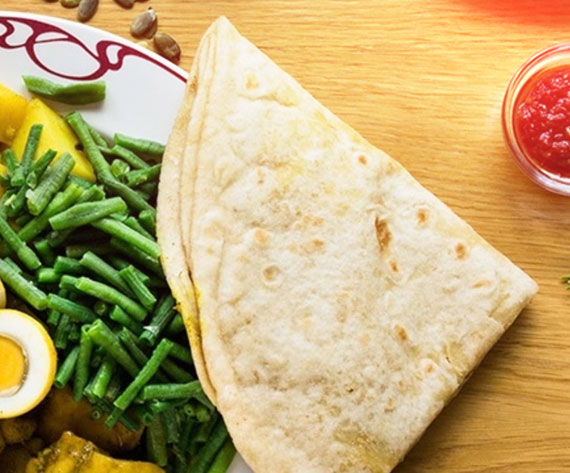

Surinamese roti, a soft flatbread made of layered white flour, came with a full meal of bold turmeric curry, split-pea dhal, long beans, boiled egg and braised eggplant.
It is one of the most popular dishes in Suriname — and also in the Netherlands, where a big Surinamese diaspora has made roti shops (rotizaken) part of the landscape in places like The Hague, Amsterdam and Rotterdam.
Whereas Indian chapati is a dry side bread, Surinamese roti serves as the vehicle for an entire meal. Unlike the Trinidadian roti, the Surinamese version comes with its own spice identity — one defined by Madame Jeanette peppers and generous amounts of turmeric, all explored through era upon era of Hindustani cooking that has had local South American soil to work with.
A Brief History of Surinamese Roti

After slavery was abolished in 1863, Dutch colonial authorities imported more than 34,000 indentured workers from British India — mainly from Bihar and eastern Uttar Pradesh — to Suriname between the years of 1873 and 1916. They came with their language, religion, customs and food. Like me, roti was a staple in their everyday cooking, and it traveled with them.
Over the generations, the dish assimilated Surinamese ingredients and transformed into something that was wholly its own. The Indian immigrants and their descendants, who are known as Hindustani Surinamese, now constitute more than 27 percent of Suriname’s population and have had an outsize impact on the country’s cuisine. Their most significant contribution is roti.
When Suriname became independent from the Netherlands in 1975, thousands of Surinamese people moved to Dutch cities — and they brought their food with them. Today, roti shops in The Hague and Amsterdam are beloved institutions, attracting customers well beyond the Surinamese community.
What Makes Surinamese Roti Different ?

Most people are familiar with at least one style of roti. Here is how the Surinamese version differs:
| Style | Flour | Texture | Served as |
|---|---|---|---|
| Indian roti (chapati) | Whole wheat | Thin, dry | Side bread |
| Trinidadian dhalpuri | White flour | Filled with split peas | Meal wrapper |
| Trinidadian buss-up-shut | White flour | Torn, fluffy | With curries |
| Surinamese roti | White flour | Soft, layered, pliable | Full meal plate |
The Surinamese version has a thicker, more pliable texture than chapati. What really sets it apart is the curry it’s served with — a ferocious, turmeric-rich gravy whose string of spices belongs to Surinamese Hindustani cooking, cut with Madame Jeanette peppers for fruity heat.
Key Ingredients in Surinamese Roti
The Flatbread
The roti dough is uncomplicated — just all-purpose white flour, water, salt and a little oil or ghee; in some recipes, baking powder. It’s the technique that counts: The dough is rolled thin, brushed with oil, folded and re-rolled to create layers, then cooked on a flat griddle called tawa until lightly golden. Wrapping it in a cloth post-cooking preserves its softness and pliability.
The Curry
This is the soul of the dish. The most traditional version uses:
- Chicken (bone-in, for deeper flavor) or potato, or both
- Madame Jeanette peppers
- Madame Jeanette peppers — yellow, fruity, and intensely hot. Added whole for controlled heat; bruised or chopped for serious fire
- Turmeric — used generously; responsible for the dish's golden color
- Cumin (jeera), coriander powder, garam masala
- Garlic and ginger paste
- Onions and tomato
- Coconut milk — adds subtle richness in many traditional recipes
The Side Dishes
A proper roti plate is never curry alone. Nothing on the plate is decoration — each element has a purpose:
- Boiled eggs — halved, often added directly into the curry
- Long beans (kousenband) — lightly stir-fried; a quintessential pairing
- Eggplant (boulanger) — cooked down with spices until tender
- Mashed yellow split peas (dhal) — creamy, mildly spiced, a cooling counterpoint to the curry
How to Eat Surinamese Roti
The Traditional Method
No cutlery needed — the roti itself is your utensil.
- Tear a piece of flatbread with your right hand
- Use it to scoop curry, potato, egg, and sides into one mouthful
- Eat with your hands — this is the authentic, correct way
Ordering at a Roti Shop (Rotizaak)
At a Surinamese roti shop, you typically choose:
- Your protein: chicken, beef, lamb, vegetables, or egg
- Sides: usually included as a set plate (dhal, long beans, egg, eggplant)
- Quantity: one or two rotis
The plate arrives with curry generously ladled, roti folded alongside, and all accompaniments in concert.
Tips for First-Timers
- Eat with your hands — cutlery diminishes the experience
- Madame Jeanette is serious heat — ask for it to be kept whole if you prefer milder spice
- If reheating, wrap roti in a damp cloth and microwave briefly — do not pan-fry it dry
How to Eat Surinamese Roti
Roti Flatbread (makes 6)
Ingredients:
- 3 cups all-purpose flour
- 1 tsp salt
- 1 tsp baking powder
- 2 tbsp neutral oil
- Approx. 1 cup warm water
Method:
- Combine flour, salt, and baking powder in a bowl
- Add oil, then drizzle in warm water, mixing until a soft dough forms
- Knead 8–10 minutes until smooth and elastic
- Cover and rest 30 minutes
- Divide into 6 balls. Roll each thin, brush with oil, fold in half, fold again, then roll out once more to create layers
- Cook on a hot, dry griddle 2–3 minutes per side until light golden spots appear. Keep warm under a cloth
Surinamese Chicken Curry
Ingredients:
- 1 kg bone-in chicken pieces
- 3 tbsp Surinamese curry powder (or mix: turmeric, cumin, coriander, garam masala)
- 1 Madame Jeanette pepper — whole for mild, chopped for hot
- 4 garlic cloves, minced
- 1 thumb ginger, grated
- 2 onions, sliced
- 2 tomatoes, chopped
- Salt and oil
- 200 ml coconut milk (optional)
Method:
- Rub chicken with curry powder, garlic, ginger, and salt. Marinate at least 1 hour
- Heat oil in a heavy pot; saute onions until golden
- Add chicken and brown on all sides
- Add tomatoes and Madame Jeanette pepper; stir well
- Add enough water to nearly cover the chicken. Cover and simmer on low heat 35–40 minutes
- Stir in coconut milk for the final 10 minutes if using. Adjust seasoning
- The finished gravy should be thick, fragrant, and deep golden
Roti and Cultural Identity
Suriname is one of the most ethnically diverse nations in the world — Hindustani, Creole, Javanese, Maroon, Chinese and European people have lived alongside each other for centuries. Its cuisine reflects that multicultural reality, and roti lies at its heart.
During colonial times, roti became a marker of resilience for the Hindustani Surinamese community, who had been indentured laborers in India, and later it evolved into an expression of belonging — a living connection to Indian heritage. Roti is made in large batches for celebrations such as Phagwa (Holi), Diwali, and family gatherings, passing generations. The sound of a roti sizzling on a tawa — in Paramaribo, in The Hague or at a diaspora kitchen anywhere — smells like home.
Nutritional Overview (per full serving with chicken curry)
| Nutrient | Approx. amount |
|---|---|
| Calories | 600–800 kcal |
| Protein | 30–40 g |
| Carbohydrates | 60–80 g |
| Fat | 20–30 g |
| Fiber | Moderate |
Values are estimates. Actual nutritional content varies by recipe and portion size.
Frequently Asked Questions
What is Surinamese roti made of?
A soft white flour flatbread that comes with spiced curry — traditionally chicken, potato or both — along with long beans, boiled egg, eggplant and split pea dhal.
Is Surinamese roti the same as Indian roti?
Is Surinamese roti spicy?
Why is roti so popular in the Netherlands?
Can Surinamese roti be made vegetarian or vegan?
Whether you are eating it for the first time or reconnecting with a childhood taste, Surinamese roti is a dish that carries centuries of history in every bite. Tear off a piece, scoop through the curry, and taste what migration, resilience, and culinary creativity built together.